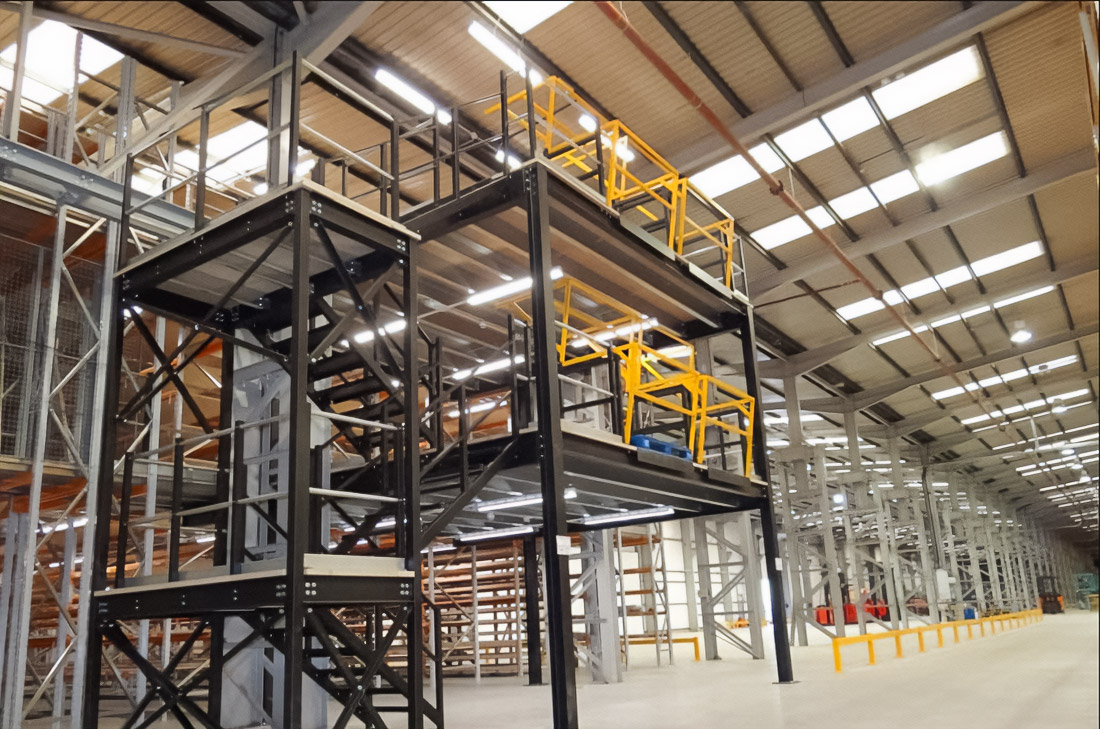
The international standard IEC 61537 defines a methodology for determining the Safe Working Load (SWL) — the maximum allowable load with UDL. The tray is considered acceptable if the longitudinal deflection does not exceed 1/100 of the span, and the transverse deflection is 1/20 of the width.
This test does not focus on specific load values, but on rigorous testing of all types of cable trays — ladder, perforated and solid
2. Why is this important in Dubai high-rise buildings?
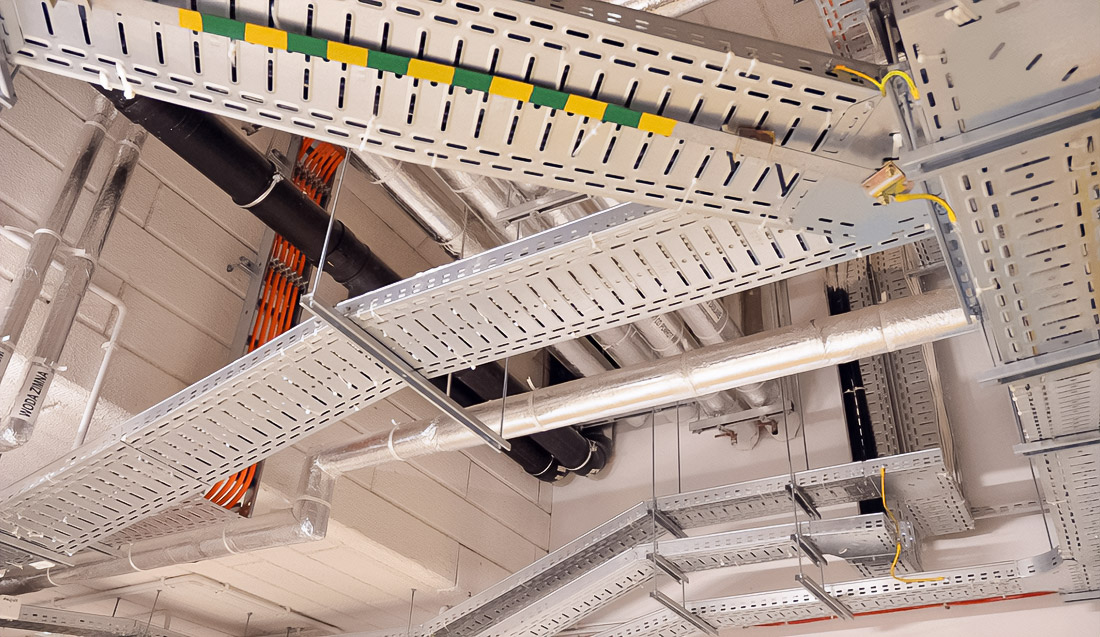
Large span length and number of cable levels. In Downtown Dubai skyscrapers, the spans can reach 1.5–2 m or more between the fulcrum points. At the same time, the weight of high‑voltage power cables, HVAC lines and backup circuits can exceed hundreds of kilograms per meter.
Thermal expansion and climate. In the hot and humid Dubai air, metal trays experience thermal stresses. Materials must consider temperature deformations without reducing the bearing capacity.
Safety and reliability. Any deflection or deformation increases the risk of mechanical damage to cables, short circuits, and fire hazards. Certification guarantees compliance with safety standards of DEWA and Dubai Building Code (including section 7.1–7.4 about Cable Trays)
3. How do the UAE cable tray manufacturing companies implement these requirements
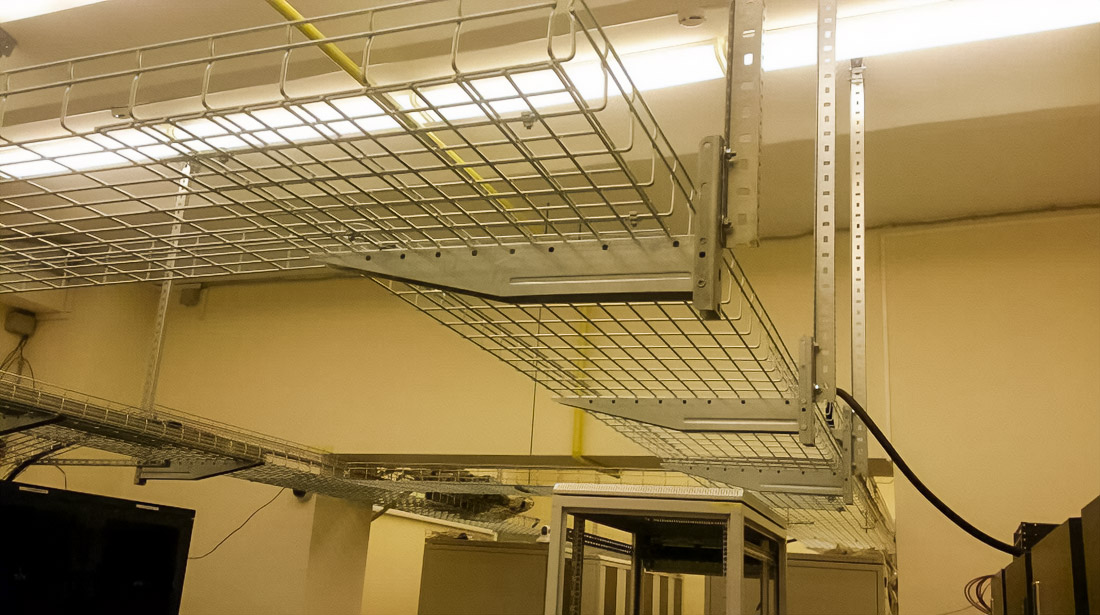
Ruwais Steel, Bonn Metal (BMCI), Arabian ICS, Emerald Steel Industries and others are well–known cable tray manufacturers in UAE, strictly following international standards (ISO 9001, IEC 61537, NEMA VE‑1, EN ISO)
→ For example, Ruwais Steel tests serial samples for strength, conducts inspections on hardness, dimensional accuracy, static load and strain testing periods
→ Arabian International Industries LLC guarantees compliance with BS EN 61537:2007/IEC 61537 and UL certificates for resistance to temperatures up to 500 °C.
4. Typical values: spans, load and materials
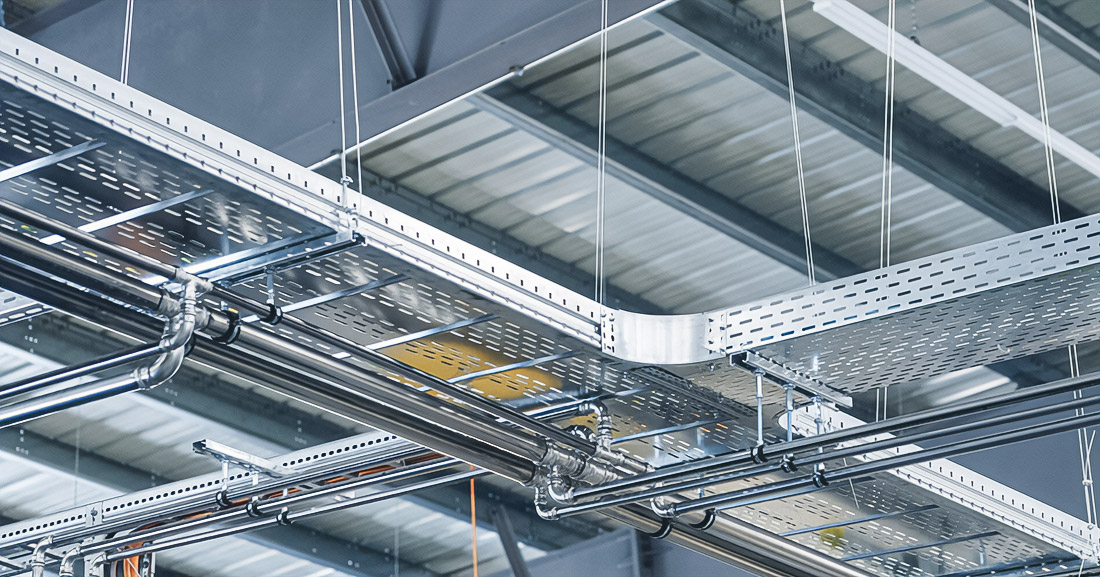
Although IEC does not dictate specific loads, practice shows that with a span of up to 1 m, the standard load can be about 100 kg/m, with a span of 1.5 m — about 75 kg/m, with 2 m — up to 50 kg/m.
By choosing a stainless steel AISI 316 or hot-dip galvanized cable tray, local manufacturers ensure minimal deflection and maximum corrosion resistance in urban environments and when exposed to salt and moisture on the facades of skyscrapers.
5. Integration into design and installation
Documentation and labelling. Each cable tray must have the manufacturer’s label, the date of manufacture, the IEC 61537 certification and the indication SWL. This is important for audits and maintenance. Support for project teams. Manufacturers such as Emerald Steel and West Port offer engineering support, AutoCAD/ PDMS design, so that the calculation of spans and suspensions meets the standards and load at the facility
Result
The IEC 61537 standard load capacity certification is not a formality, but a critical requirement for Downtown Dubai skyscrapers. Without properly tested and certified cable trays:
deflection, deformation and overload are possible.
The risk of cable damage, short circuits, and fires increases.
Violations of the standards can lead to failures during DEWA inspections and construction inspections.
When choosing reliable cable tray, order products that have a confirmed SWL, IEC test protocols, relevant materials, and designer support. This will put safety, durability and compliance with standards at the heart of Dubai’s high-rise architecture.

Cyclist, father of 3, music blogger, Swiss design-head and RGD member. Producing at the fulcrum of beauty and programing to craft an inspiring, compelling and authentic brand narrative.